Friday, September 17, 2010

"It is a feeling of relief, almost of pleasure, at knowing yourself at last genuinely down and out. You have talked so often of going to the dogs - and well, here are the dogs, and you have reached them, and you can stand it. It takes off a lot of anxiety."


The above quotation from Orwell's 'Down and Out in Paris and London' has stuck with me ever since I first read the book. At the time of that initial reading I was working at a branch of that roadside restaurant made popular by the rotund yet diminutive chef; the uniform came in L, XL and XXL and I was (and still am) none of those things. It was a sorry state of affairs, one I used to romanticise by imagining myself to be a Parisian Plongeur rather than a coffee monkey in a ridiculously over-sized nylon shirt. In the memoir Orwell elevates the mundane and often depressing life of those at the fringes of society into something noble and even at times beautiful. The reality (in a Little Chef on the A34 between Oxford and Northampton)was a little different.

Despite learning this lesson many years ago this quotation fluttered into my head this week as I stood in the queue at the Co-op clutching some Jamaican Ginger Cake and a couple of onions (read from this what you will) after a particularly grueling day at work. The 'Sneintonite' before me, god bless his greasy cap and artistically stained black jeans, had clearly gone to the dogs a while ago. As he counted out change to purchase a generous bottle of cider I found myself beginning to wonder which of us were the happier.

Orwell's observation always suggested freedom to me, a freedom from rules and expectations and the responsibilities of day to day life. Indeed it's no surprise that that existence, on the cusp of destitution barely keeping ones head afloat, is viewed so romantically. Before deciding whether to chuck in the proverbial towel and join my cider drinking friend at the dogs I decided to spend a good seventeen minutes rifling through my book case to fully investigate the matter.

Case Study One


One of the problems with 'Down and Out in Paris in London' is that it blurs the line between fiction and non-fiction. Many of the events are undoubtedly Orwell's own however in an annotated copy to friend and critic Brenda Salkeld he confessed that certain elements 'are not actually autobiography but drawn from what I have seen'. Okay Georgie boy, so how much of the camaraderie and beauty of the Paris and London streets is made up then? Can I really trust your account? Also could you really have been completely destitute in Paris when Aunt Nellie was living around the corner? I don't think I'm ready to pack in the job just yet...

Case Study Two
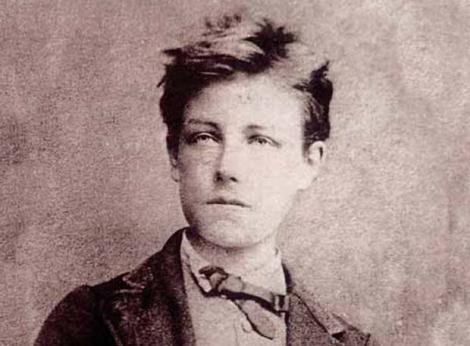


'And so off I went,fists thrust in torn pockets
Of a coat held together by no more than it's name.
O muse how I served you beneath the blue;
And oh what dreams of dazzling love I dreamed.'

Course you did Rimbaud, course you did. In 'Ma Boheme' Rimbaud appears to be laying down the blue print for every poetry drunk angel headed hipster that will follow him for the next century and a half. This idea of devotion to craft, to art, ahead of everything else is a romantic one. This lineage is particularly strong amongst the beat writers but I don't really trust those guys. They weren't destitute and suffering for their art. They were scoring chicks and having a blast. Unfortunately it was the same for Rimbaud, the poem was subtitled (fantaisie) after all and though he was famous for arriving in Paris on foot I don't think he bummed around too much whilst there. Still not quitting job...

The Final Case Study


John Fante was certainly down and out during much of his life. He is also the archetypal young male American writer drifting drunkenly through life hammering angrily at his type writer. It's all: rejection, booze, woman, booze, anonymous L.A hotel room, booze, rejection and although it makes for some great books (Ask The Dust is far superior to anything Bukowski ever wrote) it never sounds romantic or sentimental. Fante's stand in Bandini rarely sounds happy (cool sometimes for sure but not happy). My idealised life with my cider'd up Sneinton neighbour is further compromised by the fact that Fante had to dictate his final novel as his body, ravaged by alcohol, succumbed to diabetes which cost him first his eyesight then his life.

In conclusion- not quitting my job. Destitution is either a myth, a screen to score chicks and party or leads to death. It might make some great books but then I'm not planning on writing any. Also it's the holidays at the moment so bothered?

Tuesday, May 04, 2010

'At the still point of the turning world. Neither flesh nor fleshless;
Neither from nor towards; at the still point, there the dance is,
But neither arrest nor movement. And do not call it fixity,
Where the past and future are gathered. Neither movement from nor
towards...'


T. S. Eliot's poetry is undeniably slippery, especially for those foolish enough to hope to glimpse an image of the man himself beneath the layers of classical literary references and philosophical musings. In his essay 'Tradition and the Individual Talent' Eliot argues that as well as working within the literary tradition rather than seeking to escape it, good poets must not only separate themselves from their poetry, but even from that within them that experiences the things that they seek to transform into poetry. For Eliot there must be a clear distinction between 'the man who suffers and the mind which creates'. When we look at poems like The Wasteland with it's profound sense of loss, confusion and disillusionment we imagine this 'man who suffers' yet within Volume One of The Letters of T. S. Eliot (1898-1922) I'm yet to locate him. I am beginning to wonder if perhaps, like J. Alfred Prufrock, he is not there. Perhaps he is rather a spectre conjured by Eliot on which he projected and burdened his artistic impulses and less refined emotions. Nonetheless the game of cat and mouse is rather good fun.

Recently I've been wrestling with Four Quarters and in particular the opening section Burnt Norton. Unlike the Wasteland here Eliot's fragments are hopeful and even coherent in tone, as rather than mourning the loss of meaning he seems to question how much it was ever really there and offers hope in the shape of transcendence through art and, most pleasingly to me, the possibility of joy, beauty and even transcendence in the moment, the thrill of temporal existence at the 'still point'.

This got me thinking in a surprisingly macho way about sport and I have begun to formulate a clumsy thesis- that the moments Mr Eliot was referring to not only come must regularly through physical activity but that the moment where 'the dance is' can be specifically located in sporting photographs.

What I enjoy most about cycling is the oblivion of it. The focus on spinning the pedal efficiently and powerfully, on repeating the process over and over, thinking about only that endlessly and completely. Now look at the always suave two times Tour De France winner Alberto Contador in the image above, seemingly frozen on his pedals in that almost balletic angular sweep. The focus is etched on his face; for him there is only the moment, 'there is only the dance', or rather an endless repetition of fleeting moments, of muscle and metal.

Look at sporting photographs and you can see it. Search the faces, the tensed bodies, the dedication to the moment. It's practically zen like -


Perhaps it is even this that makes sport so fantastic and compelling, that it forces you whether watching or playing to exist solely in the moment. Perhaps all Eliot had to do to escape all the fragmentation he sensed around him was take up a hobby. To pull on some lycra and hop on a bike, to chuck a bit of plastic around, to chuck down some unedited manuscripts for goal posts and indulge in a game of headers and volleys with Ezra Pound.

It certainly worked for Gianluigi Buffon, the philosophically minded and fiery goal keeper pictured above-

'In football, my thoughts, my opinions, are not immediately visible; they are made evident through gestures, reactions, and reflexes. They depend as well on a very specific situation that I need to relate to at that particular moment; there is no time for hesitation.'
(Chance, intelligence, and humor: An interview with Gianluigi Buffon- Cabinet Issue 19).

I'm yet to find a letter in the aforementioned volume in which Eliot describes (Hornby-esque) the experience of watching or even taking part in a penalty shoot out but I'm hopeful. Very hopeful indeed.

Come on Eliot, on me 'ead!

Wednesday, May 06, 2009

'Evening in Oxford was a romantic time. The bells would die down, and the university would thank God for another day, well spent, before the serious drinking began.'


In Easter, which was now a while ago, Donna and I went to Oxford. On the way back we had to stop for an hour or so in Milton Keynes. Some people understand the universe in terms of binary oppositions, others go as far so as to suggest they are a structure that underlines the natural order; after visiting Oxford and Milton Keynes on consecutive days I was inclined to agree with them.

Wandering through Oxford is almost always a satisfying experience, excluding the occasional busy summer day when the streets are invaded by the 'coloured back-pack' wearing invading hordes, who cling to the benches outside McDonalds on Cornmarket Street like fluorescent limpets to the hull of an old wooden ship. Your feet clip clop pleasingly along cobbled streets as the whiff of mystery and academic vigor creeps over the colleges stoical walls. Off course what actually goes on behind these walls is probably far less romantic and far more Conservative than I'd like to imagine but it's fun to pretend.

It's an inane thing to say but it's old, and this is off course what gives it it's character. Whether it's the spherical erection of the Radcliffe camera or the squidgy center of one of Ben's Cookies, you can feel (or taste) the currents of history flowing through it and it's all the better for it.


Returning to our theory of the day- BO (not to be confused with B.O) we can only conclude that if there exists an Oxford then there must also exist a Milton Keynes. Milton Keynes is a rat run, a rat run for rats the size of cars, and I truly hope that some day a nuclear experiment gone awry will deliver this very plague upon it's parallel roads and endless roundabouts. Apparently Milton Keynes began it's life (conceptually at least) in the 1960s, this would lead you to believe that a psychedelic wonderland would abound but what one actually encounters is the grid system's wet dream. I'm throwing practicality as a concern out the window but the place stinks. Straight lines and open space between nothing but faux marble and grey skies make for a deeply uninspiring combination. The room of the temporary bus station in which Donnamo and I spent a soul destroying hour should be transposed to the stage for the perfect modern interpretation of 'No Exit'. The wonderful peroxide splattered specimen who served me the worst coffee ever would of made an intriguing Estelle and the Valet would naturally become a stage coach bus driver.

Here's the thing, if the world were a giant Milton Keynes then what kind of world would it be(aside from being one that was very friendly to the aforementioned Mega-rats)? Glancing at my book shelf I can see a number of titles set in, featuring or meditating on Oxford and it's easy to see why, just think of Morse. A quick glance at www.mk-arts.co.uk reveals 'Debenham's' upcoming festival of arts as the highlight in May's cultural calendar. I can't help but wonder what Betjeman would make of it all... I know what both Donna and I made of the chips though.

Sunday, April 05, 2009

'Listen I'll chop your spine off, you talk to me like that! You understand? Talking to your lousy filthy father like that!'

Recently one of these found it's way into my life-


It's called the 'Dyson Powerball' and it's release was greeted with a fair amount of fanfare amongst hoovering circles. The press that accompanied this new Dyson's assault on the world of vacuuming announced that the Powerball, or The Ball as I've decided to call it, offered- 'a new way to turn corners'. Fantastic, I for one know that I was bored with the old way.

To operate this over-engineered and over-priced piece of 21st century kit really is quite a profound experience,indeed we can read The Ball in a number of ways: a testament to the dogged pursuit of advancement and technological breakthrough combined with a ridiculous hyper-consumerism that leads to the design, manufacture and sale of such (unnecessary) products; as an object in purely aesthetic terms, some kind of retro-futurist sculpture that also seems to be constructed in the same vernacular as the ipod; as another example of Man's attempt to triumph over and harness the power of nature (it contains a cyclone after all). Despite all of these possibilities one truth remains- operating it makes you feel like you're piloting a space ship. This can be no bad thing.

Generally I like to hoover on Sunday mornings but it is a little early to blast of with The Ball so I have been nosing through some books I purchased recently from a charity shop. A chapter in a book by Raman Selden on Iser's particular brand of reader response criticism caught my eye, not because of the theory but because of the subject- 'The Homecoming' by Harold Pinter.

In the chapter aside from the usual 'RRC' comments (the interplay between the 'actual reader' the 'implied reader' and the book('s response-inviting structures) forming meanings and varying interpretations in pursuit of a shifting 'gestalt') were some ideas about the joy of Pinter that I found interesting, although I imagine to more astute readers these things are glaringly obvious.

I only discovered Pinter fairly recently (I am embarrassed to say) and found the experience of reading The Homecoming for the first time like being approached by an unassuming old lady on the street only to have her swear violently at you, punch you in the balls and steal your dinner money. Lines such as the one that open this blog are so joyfully over the top and yet precise that you can't help but to both laugh at them and ponder what they reveal about the characters who deliver them.

In the chapter Selden discusses how to interpret the pauses in the play, how to fill in the blanks without the assistance of the omniscient narrator we might find if The Homecoming were a novel. This is where the joy in Pinter (for me) lies, we are lead down alleyways and back streets of possible interpretation where we constantly loop back on ourselves. As the possibilities become narrower some of our ideas are confirmed, others are subverted and some are left open for us to ponder long after the play finishes. The whole time we are completely in Pinter's hands, the precision of the language the tool that allows him to form our responses and toy with them.

Obviously he's snuffed it now and that is, as far as I can see, a massive bummer. From perusing 'Various Voices' it's clear that this precise control of language could be turned to any subject; from war to politics and I do not doubt, to the various implications of The Dyson Powerball.

On wikipedia my favourite of the quotations credited to Sir James Dyson reads- 'I just want things to work properly.'

I've been imagining Pinter responding to this comment with-
'Hallelujah!
It works.
We blew the shit out of them.'

Sunday, March 22, 2009

'You can scarce imagine how nauseatingly inhuman they looked- those pale, chinless faces and great, lidless, pinkish-grey eyes!- as they stared in their blindness and bewilderment.'

Yesterday I walked through the Broadmarsh shopping center, usually I would have no cause to make such a journey but I was on the way to the station and felt, naively, that a Gregg's 'sausage and bean melt' was just the sustenance needed to energise me for my fifty minute train ride to Wellingborough. ( I have two problems with the 'sauage and bean melt': the first is semantic, why call it a melt when nothing inside it has actually been melted? I was unable to detect the taste of cheese and beans don't melt so surely it should be called a sausage and bean slice or parcel or suprise or something. The second is partly semantic and partly portion related; 'sausage and bean melt' suggests an equality between bean and sausage that simply doesn't exist, I for one, had but two slices of sausage yesterday. The balance of the pastry was all wrong, I don't think it would be too much to expect a lump of sausage every third bite or so, I think that then you could call it a 'sausage and bean melt' without raising expectations to a level that your pastry just doesn't deliver. In summary- Gregg's 'sausage and bean melt' should be called Gregg's 'bean slice with a side of sausage'.)

Wandering the Broadmarsh was not a pleasant experience, near the main glass doors (and the light) things were not so bad, the juice bar looked vaguely appealing and the T.K Max almost inoffensive. As I made the 'Dante-esque' decent into it's labyrinthian bowels however things got a whole lot worse. At the heart of Dante's hell one finds (in the word's of Alessandro Scafi in the pages of Cabinet, issue 30) '...an iced river, kept frozen by the chilly blast of lucifer's enormous bat-like wings, (which) holds traitors in the icy abscence of all human-warmth.' In the Broadmarsh an enormous 'poundland' serves the same purpose but for people from The Meadows. I was going to go on to make a comparison between my experience and that of Wells 'intrepid Time Traveller' but instead here is a video of clips from the sixties' film version of the novel set to the music of 'Drowning Pool'. Awesome.

Thursday, March 19, 2009

'Since I cannot prove a lover to entertain these fair well spoken days, I am determined to prove a villain and hate the idle pleasures of these days.'

And so begins Richard III, an unashamed, balls to the wall romp of villainy and murder; excellent. Say what you will about our boy Dick but he sure lays it all on the line right from the off. He may not be the most psychologically developed of Will's characters (although when watching a lovely performance of Othello in Oxford the other week I did wonder whether my appraisal of Shakespeare's ability to present characters tethered to real life emotional responses was accurate- Look at me I'm Othello all poised and regal, oh, now I'm rolling on the floor, murdering my number one squeeze being mental) but he sure is blast.

I've been immersing myself in all things Richard this week ready to roll it out to some cynical and weary year nines. I think this update, The Street King would totally help sell it.


So it's essentially Richard III but with Hispanics with guns, in other words, it must be awesome. Possible quotations include-

'My kingdom for a porsche'

'Once more to the beach dear friends'

and

'Hey pappy, you gon get me a burrito?'

I'm assuming the limp will just have become a gangster lean.

Wednesday, March 18, 2009

If you could visit yourself at a certain point in your life, with the luxury of greater experience and hindsight, what would you actually say to yourself?

This is the question I have been turning over in my head almost endlessly for the past seven minutes since I rediscovered (with some amusement) this aborted blog.
No doubt there was a time when I was a proud and expectant father, my imagination stretched into the future fueled by the wonder of the endless possibilities of the observations and bon mots with which I would no doubt populate my own corner of the internet. But then what?
Well nothing actually, but still something clearly prevented me from plunging into the world wide womb and committing digital foeticide. What was that force that preserved this snap-shot from three years ago for me to discover today? Providence? Rigid Catholic beliefs? (But at what point is a blog really a blog?) I would imagine it was in fact absentmindedness but nevertheless here it stands and thus here I sit, face to face with it.

So, the question remains; if you could visit yourself at a certain point in your life, with the luxury of greater experience and hindsight, what would you actually say to yourself? Well that would of course depend on the person and the moment. Britney might visit herself in the minutes prior to the shaving and say '...yah might wanna think on that for a moment Brits'. Burroughs might visit himself prior to his infamous William Tell act and go '...psssst, Bill. You don't have a William Tell act'. Tom Cruise might visit himself prior to his first Scientology meeting and go '...seriously Tom, best move ever. Better decision than Top Gun and Days of Thunder put together. Oh and Tom, you look great'.

So here lies the crux of the matter; if I were to visit myself at the start of my PGCE course, after my first day, arms loaded down with all those bloody pointless folders what would I actually say to myself?

Don't do it? Well no, probably not. I lack the imagination to do anything else and I still get a kick out of hearing kids say things like '...up your fanny...' and '...sir, what does tea bagging mean?' (Both from today.)

Perhaps I would be able to offer myself a sage piece of advice on an event that would come in the following three years, but what? I literally have nothing. It seems such an opportunity would be wasted on me.

If I ever come face to face with myself during any previous moment in my life I'll probs just leave it, all that is apart from that moment when I must have thought 'Rage against the machine are great, I should definitely grow dreadlocks.' That and the time that I also must have thought '...everyone's doing it and they're all so witty and insightful, you should write a blog too, they'll love it.'